How to Launch with Press and PR
We’re working towards a launch moment for Parallax with press and media, and, wow, I didn’t realize how much of this world is unknown to outsiders.
It felt a bit like fundraising again - there’s a small game to be played or unspoken etiquette to follow, but one may not have known if not for whispers from insiders.
Here’s me sharing what I learned (and am still learning) from various blog posts from founders and journalists, calls with the marketing and PR folks, and lessons learned along the way.
Why press? What goals?
- Press of launch day itself is NOT success. It should lead to a larger goal besides itself.
- PR is not scalable. Use it as a booster to accelerate other customer marketing (content, outbound, ads, SEO) or other goals (hiring, investors).
- The launch day can also be an external deadline or forcing function to ship and align the team. Deadlines force progress.
⚡ Our goals at Parallax: We wanted this to feed into increased credibility and trust (especially as a fintech app) and our long-term SEO strategy. We were literally getting asks from (potential) users saying, “Hey, I like your offer but you seem like a scam because I can’t Google anything about you!”
Two Strategies: Exclusive vs. Embargo Strategy
- Exclusive: one reporter breaks the news
- Pro: Increases chances of coverage as reporters are more likely to write about you if they are promised the story.
- Con: Less wider coverage.
- PR firms often recommend this because they are incentivized to get you some coverage, not max.
- Embargo: asks reporters to hold story until embargo date
- Pro: Gets you wider coverage with more outlets, ideally.
- Con: High risk; you also may get nothing at all if your story is not captivating enough.
Choose the one that best fits your goals.
⚡ What Parallax did: An exclusive strategy. We wanted at least 1 article from reputable US media outlets, guaranteed, that then led to pickups from local news reporters in our target market.
Prep & Timeline
- Buffer about ~4w before a press release.
- What to prep?
- Write the pitch and story + create the media brief / press kit (1w)
- Reach out to reporters and get their commitment (1.5 - 2w depending on their responses)
- Prep for amplification on launch day itself, sending messages to friends of your company, customers, investors and making it easy for them to amplify your launch (1w)
⚡ What Parallax’ timeline looked like: [to be added when released]
To PR Firm or Not to PR Firm?
- ✅ Someone else handles it completely. PR can take up a lot of time
- ✅ Know what to do. Have done this in the past
- ❌ No built personal relationship with reporters
- ❌ Can be expensive
- ❌ Sometimes reporters want to hear from founders or CEOs directly
⚡ What Parallax did: We ran our own process, as we couldn’t justify the % cost of hiring a separate PR firm (and still needing to take the time to manage them!). We kept it very focused and timebox-ed. Now we have relationships & learnings for the future and for others!
Pitch
- What makes a pitch compelling:
- The fact that you exists = NOT news
- TIME news to be RELEVANT to today
- Interesting founder stories or inception stories
- Relevant for that particular reporter to pick up
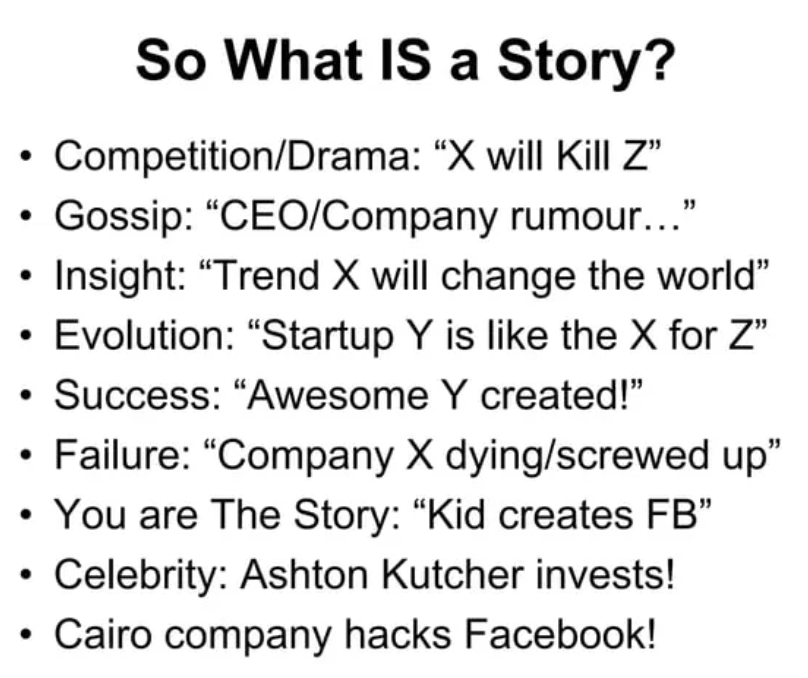
- Stand out through 1) entertainment (e.g. founder stories; 2) value (e.g. good advice to readers)
- OK: “Acme raised funding”
- Better: “Here’s the deck Acme used to raise in a bear market” / “Founder takes lessons learned from failed startup to build Acme”
- Pulley: coupled funding announcement with launch of free plan for startups. They knew macro was tough so needed to help founders raising.
⚡ What Parallax did: [to be added when released]
Press Kit
- Content:
- About the Company
- Story or Key Information
- FAQs for Reporters
- Quotes & Testimonials (from investors, from customers)
- Links
- Website or app
- Link to blog post announcement or press release
- Previous press about the startup (if any)
- Images: shots of logos, product & founder.
- Cover photos of people get more clicks.
- Direct links to web-ready logo
- Should be setup for dimensions of the publication
- Contact Information
- Don’t send as an attachment - send as plain text or a link out!
- Turns out, attachments on email are a big pain for reporters, if they got a load of pitches daily! That’s A LOT of memory. Be considerate.
⚡
Reporter First Outreach
-
The best: Build a relationship
- As with anything, building a good relationship is always best
- If PR/media is core to your strategy, best to send them info about your industry or beats that help them with their stories, even before you need PR.
-
How to find emails of reporters?
- Start with network - investors + others founders who were covered are usually good sources
- Scale to outbound if exhausted. Usually they publish their emails in their author pages or LinkedIn.
Think the more important question here is: How do you find the right reporters to send the email to? Answer: DYOR (do your own research!)
-
To keep in mind:
- BUSY! Bombarded with several pitches daily, need to write their own stories pitched to them prior, have other deadlines they are going through
- Incentivized by interesting AND timely news
- Reporters like exclusives more than embargo, if you have the ability to offer this.
-
To do’s and not to do’s
- Research research research! You need to make sure you’re pitching to the right media outlet and to the right reporter in that outlet.
- Skip the mass email - personalize it!
- Conversations are better than > press releases. Be open to a call with them.
- Be thankful they even responded. They don’t owe you anything.
- If they write about you, build a relationship. Keep talking to them even after!
- Consider: create BUZZ or your own news before the pitch
- Do not ask permission. JUST DO IT.
- Bad: “Hey Mike, can I send you a press release?” #FAIL
- Be brief! Make it easy for them to understand your pitch.
- Try to pitch in person. If not, add personality (include pictures/video)
-
Suggestions for content:
-
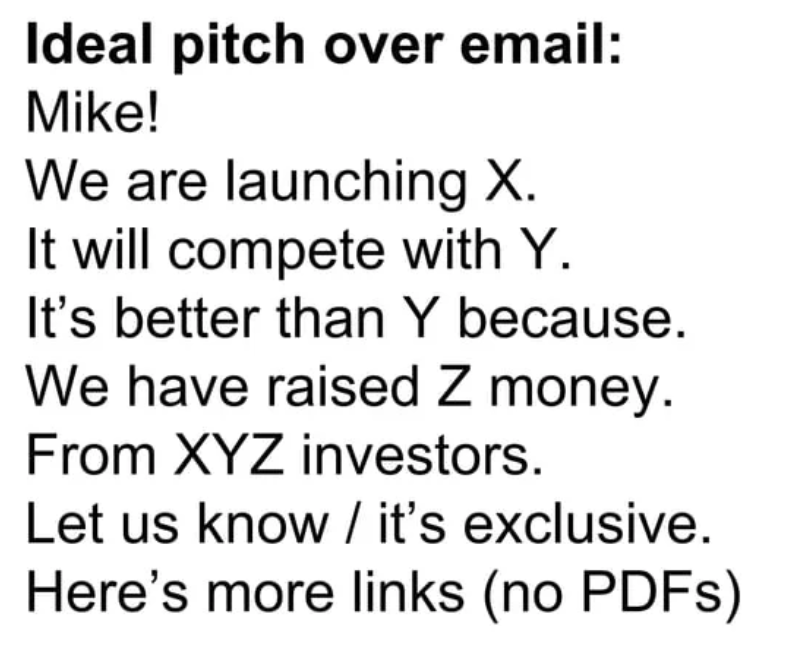
One/two line email: “Hey _, we’re doing X next week. Are you interested?”
-
Mike Butcher’s ideal pitch:
-
-
Good vs bad stories
⚡ Examples of Parallax’ pitches: [to be added once released]
Amplification on Launch Day
- Risks + Mitigation: make a list of everything that can go wrong and do a dry run
- Test signups and onboarding
- Check landing page on mobile
- Prepare for 10x signups
- Prep for the BEST CASE — your launch goes viral
- Make it easy to amplify
- Tell your investors, customers, friends, and family a week prior and a day prior to be ready to help amplify the launch.
- Include blurbs so people can copy/paste their own
- Be focused on which post to amplify. Have 1 particular post (on LinkedIn, Twitter, etc.) to drive amplification towards. Don’t spread TOO thin across several.
⚡ Examples of Parallax’ amplification asks: [to be added once released]
References
- Mike Butcher’s How to Deal with Tech Media
- Yin Wu’s Tweet on Pulley’s Launch
- Mike Butcher’s The Press Release Is Dead
- Help from our investors’ PR folks, specifically Casey from Dragonfly, Samantha from General Catalyst
⚡ What Parallax’ press kit looked like: [to be added when released]