Color Theory Analysis
I wanted a color analysis that was visual, clear, and actually useful.
So instead of asking for only a seasonal label, I asked ChatGPT to generate a full stylist-style breakdown with try-ons, palettes, and comparisons.
The key was being specific about output quality, structure, and realism.
When the prompt is detailed, the result is much easier to use in real life.
Prompt to use
Perform a professional, in-depth personal color analysis on the person in this photo. Output in an image with all the information.

1. Determine their seasonal color type (e.g., True Spring, Soft Autumn, Cool Winter, etc.) based on skin undertone, contrast level, hair, and overall harmony. Clearly label the result.

2. Generate a complete color palette tailored to them, including:
- Core best colors (dominant palette)
- Best neutrals
- Supporting/accent colors

3. Create visual try-ons:
- Replace the person’s clothing in the image with each of the recommended colors from their palette
- Show multiple variations so each color is clearly represented on the subject
- Keep lighting, skin tone, and realism consistent across all variations

4. Style recommendations (visually illustrated where possible):
- Best metals (e.g., gold, silver, rose gold)
- Ideal hair tones (with visual swatches or applied examples)
- Makeup palette (foundation undertone, blush, lipstick, eyeshadow)

5. Contrast with “worst colors”:
- Identify colors that clash with their undertone or overpower their features
- Create side-by-side visuals showing the subject wearing these unflattering colors
- Ensure the comparison clearly highlights why these colors are less suitable

6. Output format:
- Produce a clean, well-designed set of 3–5 visual boards/images (not one crowded image)
- Separate sections such as:
  • Profile + palette overview
  • Best colors (with outfit variations)
  • Neutrals, metals, hair, makeup
  • Colors to avoid (with comparisons)
- Use a polished, editorial or infographic style (similar to a professional stylist or fashion guide)

7. Overall goal:
Create a visually compelling, easy-to-understand color analysis that clearly shows transformation, contrast, and styling guidance—not just static swatches.

Additional instruction:
Prioritize photorealistic rendering, accurate skin tone preservation, and consistent facial features across all variations.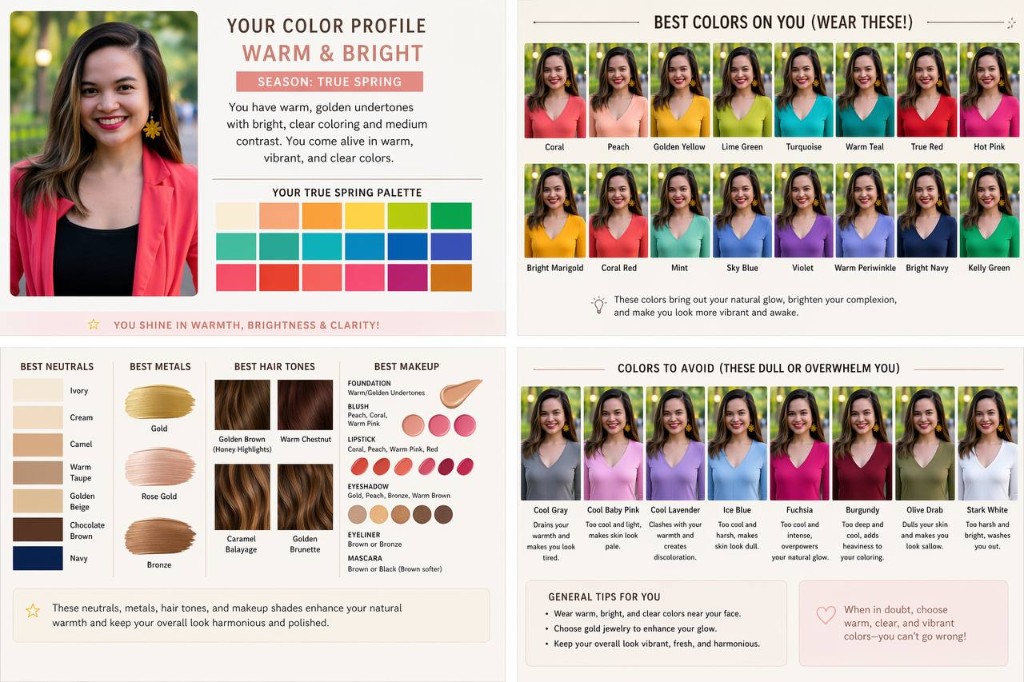
Additional Reading
Here are some related guides to check out: