
Beauty & Style Analysis Prompts for ChatGPT

Co-founder at King’s Cross Labs · ex-LinkedIn PM & Forbes 30 Under 30
Seven prompts that turn one uploaded selfie into a personalized visual style guide. All follow the same structure: role, analyze, output, sections, realism rules, tone.
How to use: Upload one clear, well-lit photo of your face (or upper body where noted). Paste the prompt. Send.
Tip: If the model drifts into cartoon or avatar territory, paste the universal realism add-on at the end of any prompt.
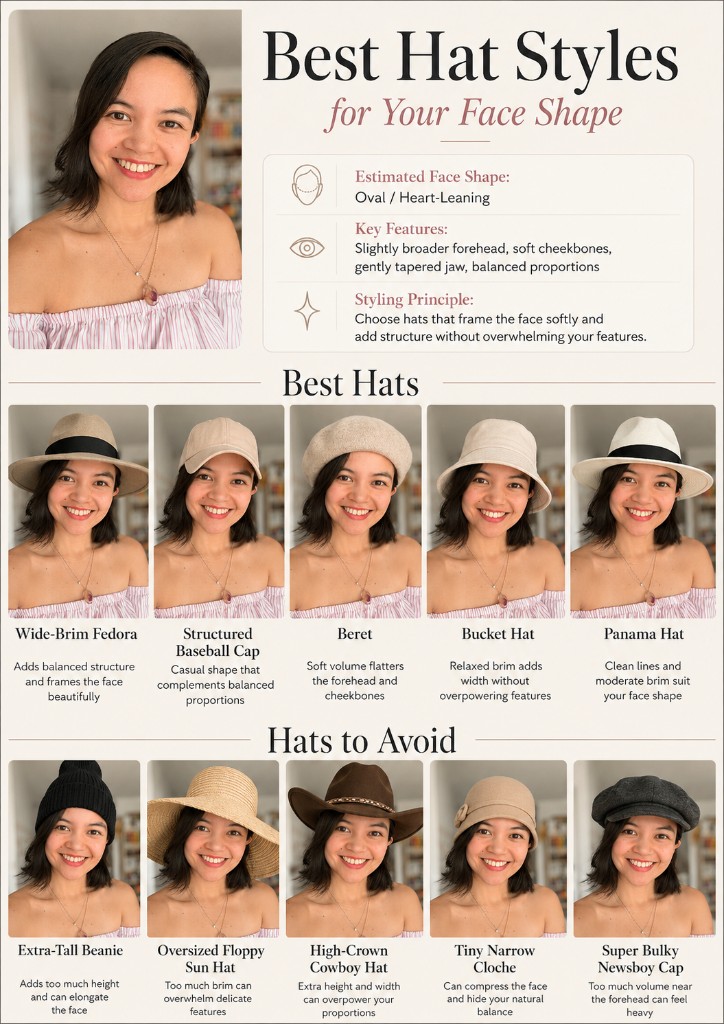
1. Hat Style Guide
A personalized hat guide based on your face shape: 5 flattering styles on you, 5 to skip, and why each works.
ROLE
You are a personal stylist and fashion editorial designer.

I am uploading one clear photo of my face. Create a personalized hat-style guide for me.

ANALYZE
Assess my visible features: face shape, forehead width, jawline, cheekbones, chin shape, face length vs. width, overall facial balance, hair volume/hairstyle, and personal style cues from the image.
Do NOT let my current hat, hairstyle choice, or outfit bias the recommendations — base everything on my facial structure and proportions.

OUTPUT
Create ONE vertical portrait infographic image with a clean fashion-editorial layout: soft neutral background, modern typography, clear labels, grid layout.
Title: "Best Hat Styles for Your Face Shape"

SECTIONS
1. Face Analysis (top) — estimated face shape, key features, and the core hat-styling principle for my face.
2. Best Hats (middle) — the 5 most flattering hat styles, each shown ON ME (same realistic person in every example), clearly labeled, with a one-line reason why it works. Choose from: wide-brim fedora, structured baseball cap, beret, bucket hat, panama, cloche, cowboy hat, newsboy cap, boater, beanie, floppy sun hat — pick only the 5 true best matches.
3. Hats to Avoid (bottom) — 5 less-flattering styles, shown visually and labeled, with a one-line reason (e.g., overwhelms the face, elongates/widens proportions, hides best features).

REALISM RULES
- Render me photorealistically: natural skin texture, realistic facial proportions, realistic hair, believable lighting.
- Do NOT turn me into an illustration, cartoon, anime character, painting, vector art, or stylized avatar.
- Keep my appearance, hairstyle, and identity consistent across every hat example. Flattering likeness — no exaggeration or distortion.
- Use realistic hat materials, proportions, and lighting.

TONE & GUARDRAILS
Helpful, flattering, and confident — like a personal fashion consultant's editorial guide. No harsh or negative judgments about my features.
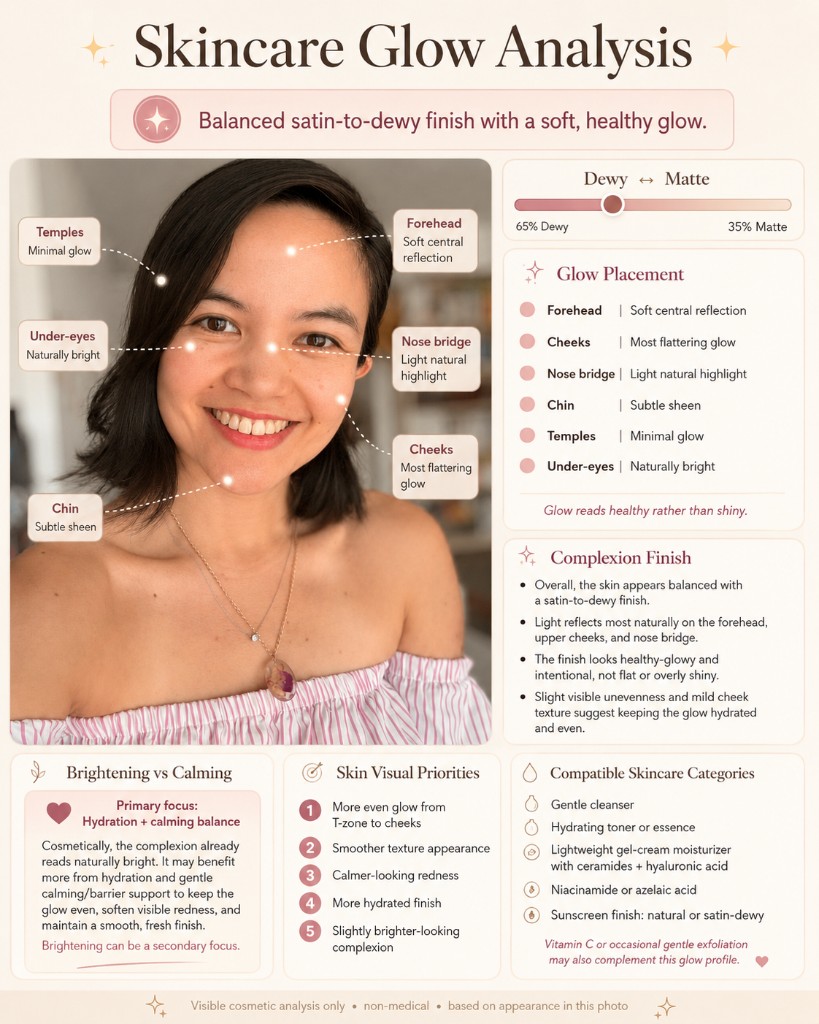
2. Skincare Glow Analysis
A cosmetic skin-finish read: where you sit on the dewy-to-matte scale, glow placement on your face, and product categories that may help (non-medical, appearance only).
ROLE
You are a beauty editor and cosmetic skin-finish analyst. This is a cosmetic analysis only — observable traits, not medical assessment.

I am uploading one clear photo of my face. Create a "Skincare Glow Analysis" for me.

ANALYZE
Evaluate only what is visible in the photo:
1. Overall complexion finish — dewy, matte, satin, oily-looking, dry-looking, balanced, or uneven; where my skin reflects light; whether the finish reads as healthy-glowy, flat, or overly shiny.
2. Glow placement — key glow zones (forehead, cheeks, nose bridge, chin, temples, under-eyes); flattering luminosity vs. excess shine.
3. Brightening vs. calming — whether my face would visibly benefit more from brightening, calming/barrier support, hydration, oil control, or texture refinement, and why (dullness, redness, uneven tone, dryness, shine).
Do NOT diagnose skin conditions or make medical claims. Use hedged language: "visibly," "appears," "may benefit from," "cosmetically, this suggests."

OUTPUT
Create ONE vertical portrait image styled like a premium skincare-app result screen: clean editorial beauty layout, soft neutral tones, subtle glow accents, my photo as the central visual reference.
Title: "Skincare Glow Analysis"

SECTIONS
1. Overall skin-finish verdict (short)
2. A "Dewy ↔ Matte" scale showing where I sit
3. Glow Placement mini-map with labeled callouts on my face
4. Complexion Finish summary
5. Brightening vs. Calming recommendation
6. 3–5 cosmetic improvement priorities (e.g., more even glow, smoother texture appearance, reduced excess shine, more hydrated finish, calmer-looking redness, balanced T-zone)
7. 3–5 compatible skincare categories (e.g., gentle cleanser, hydrating toner/essence, gel moisturizer, barrier cream, niacinamide, vitamin C, azelaic acid, ceramides, hyaluronic acid, BHA/AHA, sunscreen finish: dewy/natural/satin/matte). Keep suggestions general — do not prescribe treatment.

REALISM RULES
- Keep my photo/likeness photorealistic and unaltered as the reference — no smoothing me into an illustration or avatar.
- Preserve my skin tone, features, and identity exactly.

TONE & GUARDRAILS
Supportive, honest, non-judgmental, beauty-editor style. Make me feel good while still being useful. No claims about acne, rosacea, dermatitis, allergies, or any medical condition.
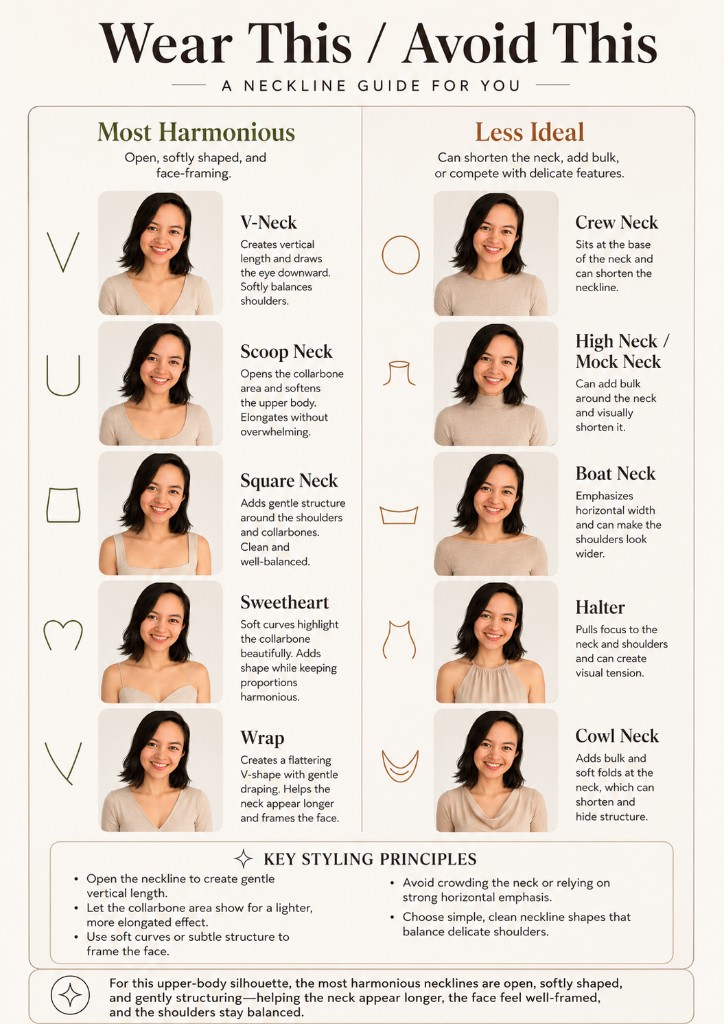
3. Neckline Guide
A neckline cheat sheet for your upper body: 5 most harmonious shapes, 5 to avoid, and a wear-this / avoid-this recap. Upload a chest-up or upper-body photo.
ROLE
You are a personal stylist, fashion illustrator, and visual body-proportion analyst.

I am uploading one clear photo of my upper body. Create a personalized neckline guide for me.

ANALYZE
Assess my upper body only: face shape, neck length, shoulder width/slope, bust/chest proportions, torso proportions, collarbone area, vertical balance, and overall upper-body silhouette.
Do NOT let my current outfit, neckline, colors, pose, or clothing fit influence the recommendations — treat my current outfit as irrelevant visual noise.

OUTPUT
Create 1–3 vertical portrait images (whichever communicates best) with a clean fashion-editorial layout: neutral background, clear labels, simple solid-colored clothing so the neckline shape is the focus, same body/face reference used consistently throughout.

SECTIONS
1. Best Necklines — the 5 most harmonious necklines for me, each shown on my upper body, labeled, with a short note on why it works (how it affects neck length, shoulder balance, face framing, bust/chest, and overall proportion).
2. Necklines to Avoid — the 5 least ideal options, shown and labeled, with a short note on why (shortens the neck, over/under-emphasizes shoulders, creates imbalance around the face, makes the upper body read boxy or compressed) and a better alternative.
3. Summary — a side-by-side "Wear This / Avoid This" recap plus my single most important neckline principle.
Choose from: V-neck, scoop, square, sweetheart, off-the-shoulder, boat, halter, crew, high neck, cowl, one-shoulder, wrap, collared, deep U, asymmetric. Pick only what truly fits the analysis.

REALISM RULES
- Render me photorealistically — no illustration, cartoon, or stylized avatar.
- Do not change my body size, face, ethnicity, age, or core features. Keep me consistent across all examples.
- Do not sexualize.

TONE & GUARDRAILS
Body-neutral, specific, constructive. Use language like "balances," "elongates," "softens," "frames." Never critique weight or attractiveness; no words like "flaws" or "problem areas." Focus purely on styling harmony and proportion.
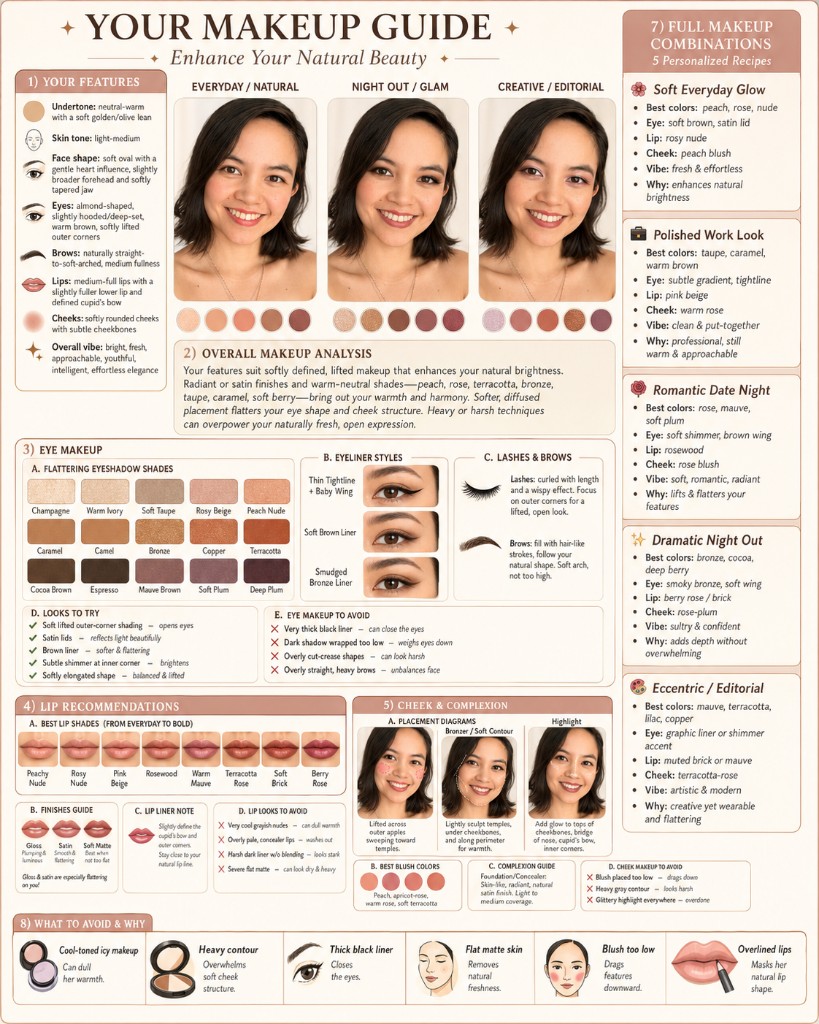
4. Makeup Guide
One visual makeup guide: your features, three full looks (everyday, glam, editorial), eye/lip/cheek breakdowns with swatches, five named recipes, and what to avoid.
ROLE
You are a makeup artist, beauty consultant, and visual style analyst.

I am uploading one clear photo of my face. Create a personalized makeup guide for me.

ANALYZE
Assess my natural features from the photo only: face shape, skin tone, undertone, eye shape, brow shape, lip shape, cheek structure, and overall vibe.
Do NOT let any makeup I'm currently wearing affect the results — analyze my underlying features.

OUTPUT
Create ONE vertical portrait infographic image titled "YOUR MAKEUP GUIDE" with subtitle "Enhance Your Natural Beauty." Clean layout: summary box, portraits, circular color swatches, and labeled placement diagrams. Prioritize visuals over paragraphs — readable at a glance.

SECTIONS
1. Your Features (summary box) — undertone, skin tone, face shape, eyes, brows, lips, cheeks, overall vibe.
2. Three Looks (top row) — three portraits of ME wearing makeup that suits me: Everyday/Natural (fresh, effortless), Night Out/Glam (sultry, elegant), Creative/Editorial (playful, modern). Color swatch row under each.
3. Overall Analysis — short paragraph on my best styles, finishes, colors, and techniques.
4. Eyes — eyeshadow swatch grid (12+ shades for me), eyeliner style close-ups, lash & brow guidance, plus eye looks to avoid and why.
5. Lips — best shades (everyday → bold), finishes (gloss/satin/matte), liner technique, plus lip looks to avoid and why.
6. Cheeks & Complexion — face diagrams for blush, bronzer/contour, and highlight placement; blush colors; foundation/concealer finish; what to avoid.
7. Five Named Recipes (sidebar) — e.g., Soft Everyday Glow, Polished Work Look, Romantic Date Night, Dramatic Night Out, Editorial. Each: colors + eye + lip + cheek + why it works for my face.
8. What to Avoid (bottom row) — 6 items with X icons and a one-line reason each.

REALISM RULES
- All portraits and diagrams must preserve my identity and likeness — photorealistic, not illustrated or stylized.
- Base every recommendation on my actual features in the photo, not generic advice.

TONE & GUARDRAILS
Honest but kind. Enhance my features, don't cover them up. Practical, specific, easy to recreate at home.
5. Hairstyle Guide
A haircut guide based on your face shape: 5–6 styles on you, cuts to avoid, and a top 3 with salon-ready language you can show your stylist.
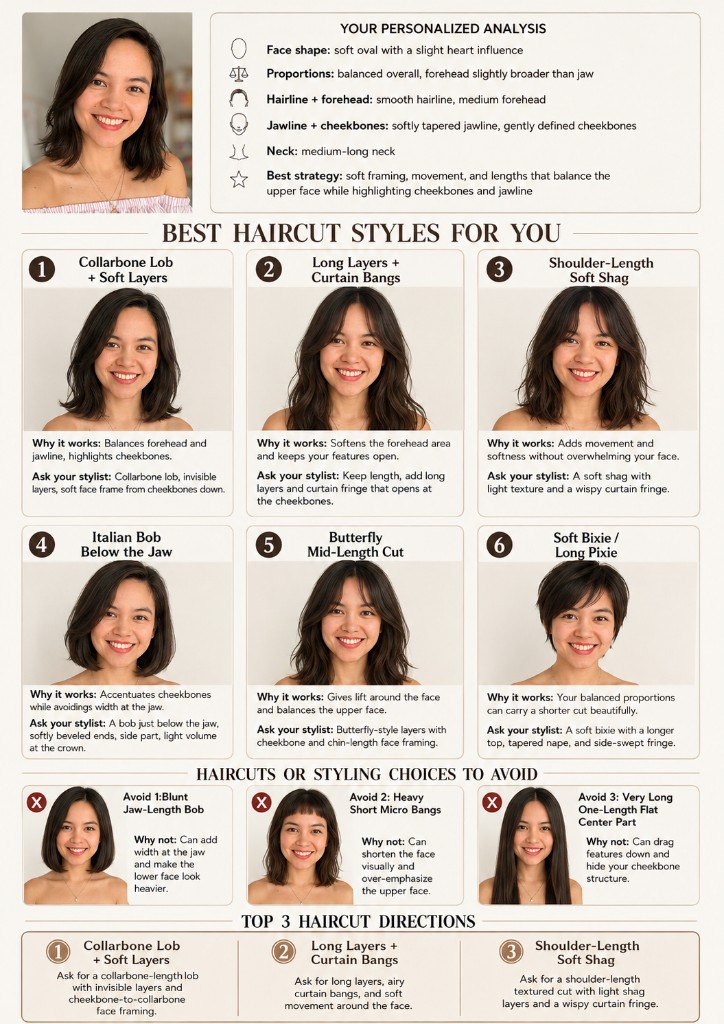
ROLE
You are a master hairstylist and face-shape analyst.

I am uploading one clear photo of my face. Create a personalized hairstyle guide for me.

ANALYZE
Assess my face shape, facial proportions, hairline, forehead, jawline, cheekbones, neck length, and overall features.
Do NOT let my current haircut influence the recommendations — analyze my underlying structure.

OUTPUT
Create ONE vertical portrait infographic image (or 2 if needed for clarity) with a clean visual comparison layout: neutral background, clear labels, my face used consistently in every example.

SECTIONS
1. Face Analysis — face shape, key proportions, and the core hair-styling principle for my features.
2. Best Haircuts — 5–6 styles shown ON ME, covering different lengths, layers, bangs/fringe options, partings, and textures. Label each, with a one-line note on how it interacts with my face shape, jawline, forehead, and cheekbones.
3. Cuts to Avoid — 3–4 less-flattering examples with a one-line reason (what they emphasize or unbalance).
4. Top 3 Recommendations — my three best haircut directions, each with a short "ask your stylist for…" description in practical salon language I can show at the chair.

REALISM RULES
- Render me photorealistically with my actual face — no illustration, cartoon, or stylized avatar, and no generic model heads.
- Preserve my identity, skin tone, and features consistently across every hairstyle example.

TONE & GUARDRAILS
Realistic and personalized, not generic. Flattering and practical — no negative judgments about my features.
6. Eyewear Guide (Glasses + Sunglasses)
A 2-page eyewear guide: face analysis, best frames, frames to avoid, and a shopping cheat sheet. Page 1 is prescription/reading glasses; page 2 is sunglasses.
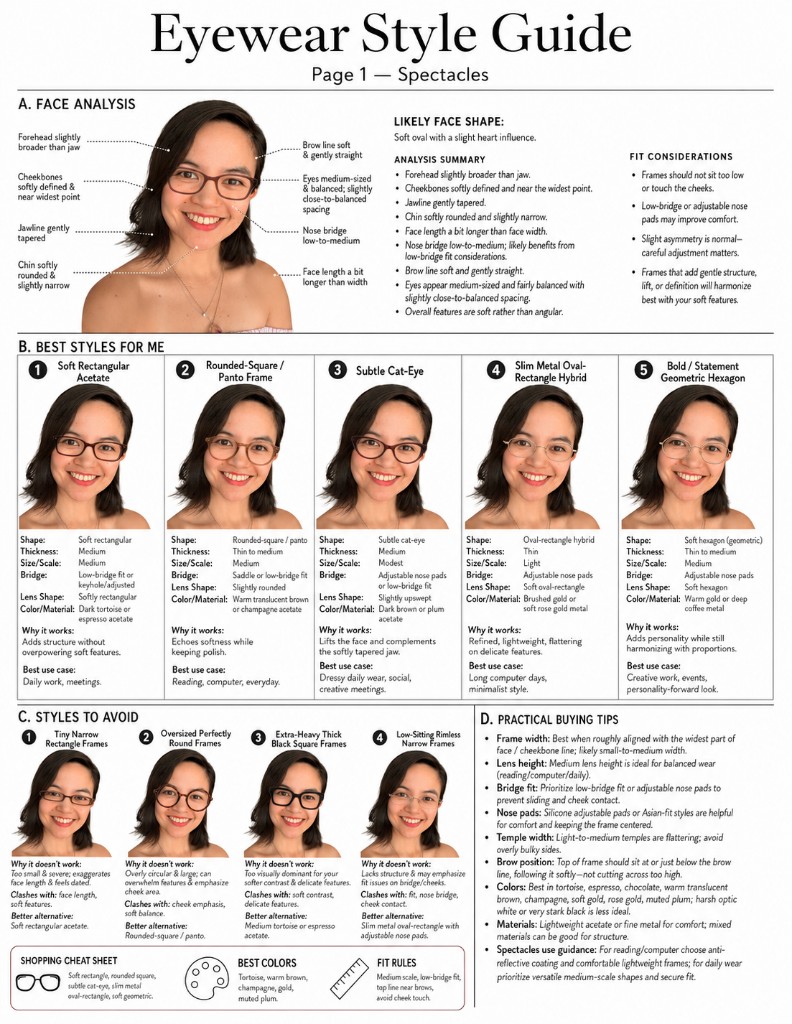
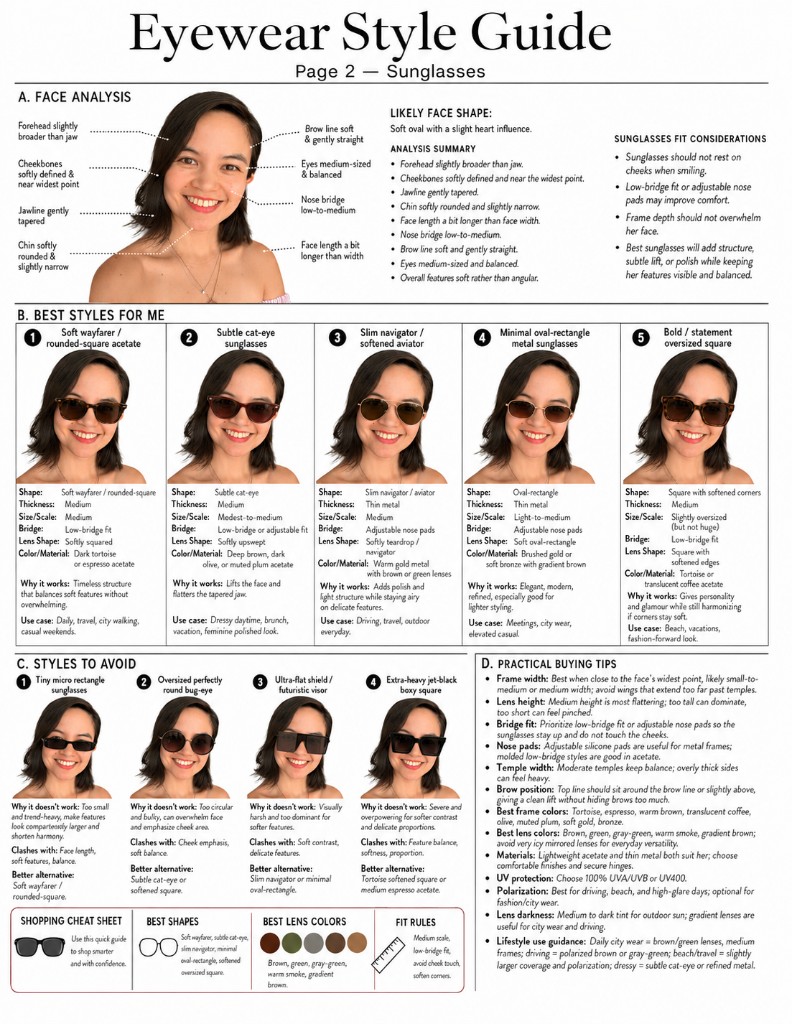
ROLE
You are a personal stylist and eyewear-fitting specialist.

I am uploading one clear photo of my face. Create a polished 2-page visual eyewear guide for me, balancing aesthetics, proportions, personality, and everyday practicality.

ANALYZE
Assess my likely face shape and key proportions: forehead width, cheekbone width, jawline, chin shape, face length, nose bridge, brow line, eye spacing, softness vs. angularity, and any asymmetries that matter for fit.
Do NOT let any glasses I'm currently wearing bias the recommendations.

OUTPUT
Create exactly 2 vertical portrait images on a white background, in a premium personal-styling moodboard layout: labeled sections, concise annotations, side-by-side comparisons.
Page 1: Prescription/reading glasses. Page 2: Sunglasses.

SECTIONS (each page)
1. Face Analysis — face shape, proportions, and what frame qualities will harmonize with or balance my features.
2. Best Frames — 4–6 recommended options shown realistically ON ME. For each: frame shape, thickness, size/scale, bridge type, lens shape, color/material, why it works, and best use case (work, reading, travel, casual, dressy, driving, beach).
3. Frames to Avoid — 3–4 less-flattering options shown on me, each with: what it is, why it doesn't work, what feature it clashes with, and a better alternative.
4. Shopping Cheat Sheet — best frame shapes, colors, and fit rules for me: frame width, lens height, bridge fit, nose pads, temple width, brow alignment, colors for my skin tone/hair/contrast, and materials. Page 1: add reading/computer/daily-wear guidance. Page 2: add UV protection, polarization, lens darkness, and gradient-lens guidance.

REALISM RULES
- Keep all visuals realistic and recognizable as ME — preserve my facial identity, skin tone, hair color, and natural proportions. No over-beautifying or stylizing.
- Neutral lighting, refined modern layout.

TONE & GUARDRAILS
Stylish, timeless, and wearable over trendy — include 1–2 bold personality options but label them clearly as statement choices. Practical enough that I could shop directly from the guide.
7. Personal Color Analysis
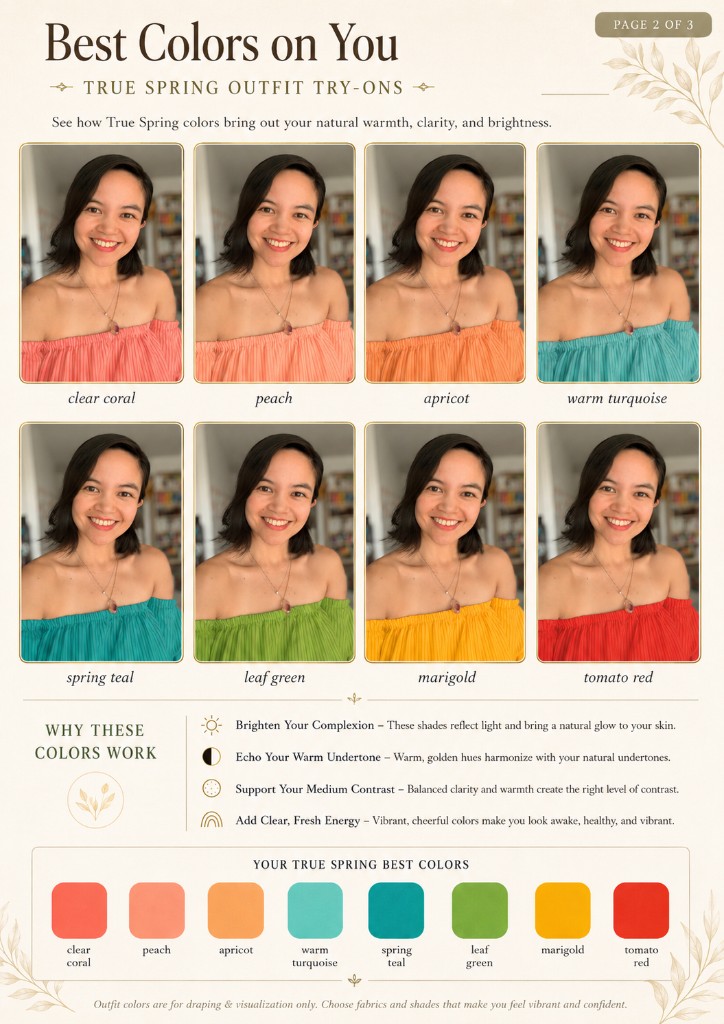
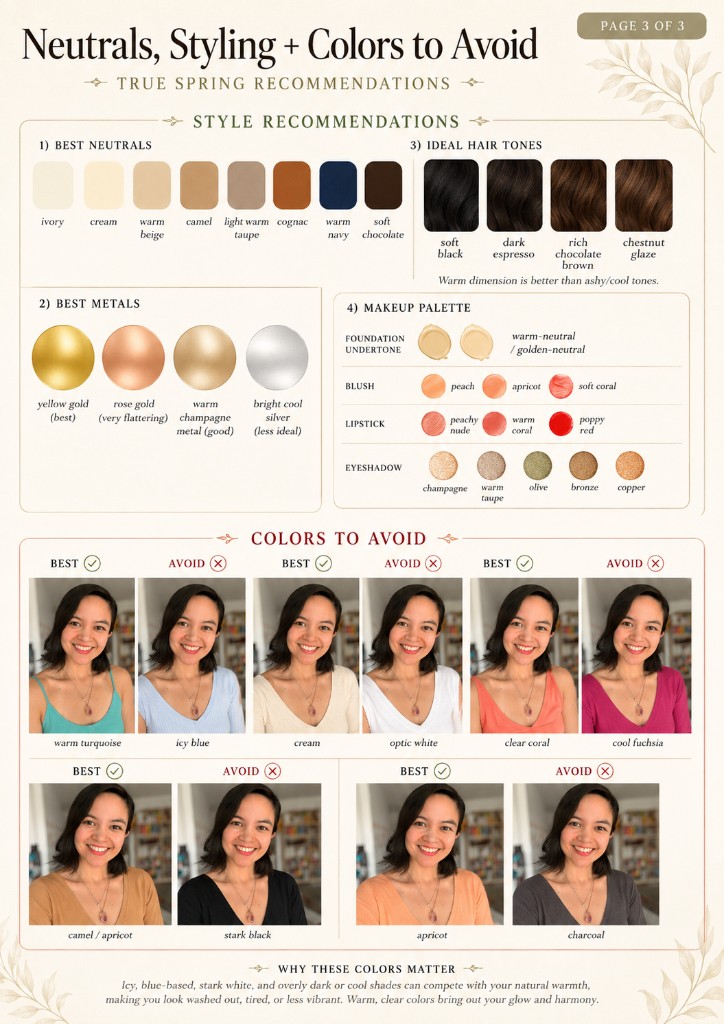
A 3-page seasonal color analysis: your type and palette, outfit try-ons in your best colors, styling extensions (metals, hair, makeup), and side-by-side colors to avoid.
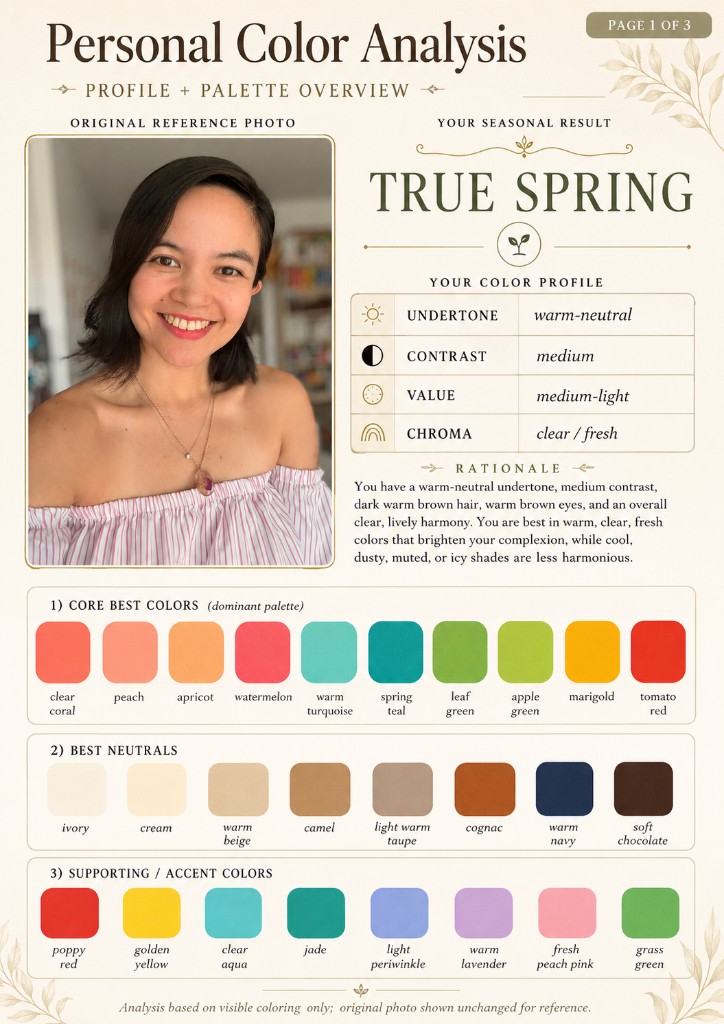
ROLE
You are a professional personal color analyst and stylist.

I am uploading one clear photo of my face. Perform an in-depth seasonal color analysis on me.

ANALYZE
Determine my seasonal color type (e.g., True Spring, Soft Autumn, Cool Winter) based on skin undertone, contrast level, hair color, and overall harmony.
Do NOT let my current makeup, clothing, jewelry, or photo lighting bias the analysis — assess my underlying coloring.

OUTPUT
Create 2–3 separate vertical portrait images (not one crowded image), in a polished editorial/infographic style with clear headers for each section. Show my original photo as an unaltered reference on the first board.

SECTIONS
1. Profile + Palette Overview — my seasonal type clearly labeled, with the reasoning (undertone, contrast, harmony), plus my complete palette: core best colors, best neutrals, and accent colors.
2. Best Colors Try-On — photorealistic try-ons of ME wearing outfits in my recommended colors, with enough variations that each key color is clearly represented. Keep lighting, skin tone, and realism consistent across all variations.
3. Styling Extensions — best metals (gold/silver/rose gold), ideal hair tones (swatches or applied examples), and makeup palette (foundation undertone, blush, lipstick, eyeshadow).
4. Colors to Avoid — colors that clash with my undertone or overpower my features, shown as side-by-side try-ons of me wearing them so the contrast with my best colors is obvious.

REALISM RULES
- Photorealistic rendering with accurate skin-tone preservation and consistent facial features across ALL variations — no illustration or stylized avatars.
- Do not alter the original reference photo at all.

TONE & GUARDRAILS
Clear, confident, and visually compelling — show transformation and contrast, not just static swatches. Easy for a non-expert to act on.
Universal realism add-on
Paste this at the end of any prompt above if the output drifts into illustration or avatar territory:
Render the person photorealistically. Do not turn them into an illustration, cartoon, anime figure, painting, digital drawing, or stylized avatar. The subject must look like a real person based on the uploaded photo, with natural skin texture, realistic facial features, realistic hair, and editorial fashion photography styling. Keep the person's appearance and identity consistent across every example in the image.Additional Reading
Here are some related guides to check out:
Frequently asked questions
- Can ChatGPT tell me what hairstyles or hats suit my face?
- Yes. Upload one clear, well-lit photo of your face and paste a structured prompt, and ChatGPT will analyze your face shape and proportions to recommend styles that flatter you plus ones to skip, each with a reason. The guide has ready-to-use prompts for hats, haircuts, necklines, makeup, eyewear, and color. Each returns a visual guide showing the styles on you.
- How do I get an AI personal color analysis from a selfie?
- Upload one clear photo and use the personal color analysis prompt, which determines your seasonal type (like True Spring or Cool Winter) from your undertone, contrast, and hair color, then gives you a full palette, outfit try-ons in your best colors, and colors to avoid. Tell it not to let your current makeup or lighting bias the read. You get a multi-page editorial-style guide you can shop from.
- Why does the AI turn my photo into a cartoon, and how do I stop it?
- That happens when the model drifts into illustration or avatar territory instead of keeping you photorealistic. Paste the universal realism add-on at the end of any prompt. It tells the model to render you as a real person with natural skin texture and a consistent identity across every example, not a drawing. Every prompt in the guide also has built-in realism rules for this reason.
- Are these AI skincare readings medical advice?
- No. The skincare glow analysis is a cosmetic, appearance-only read of what's visible in your photo, like where your skin sits on the dewy-to-matte scale and which general product categories may help. It deliberately avoids diagnosing conditions and uses hedged language like "appears" and "may benefit from." Treat it as beauty-editor styling, not dermatology.